
Top 20 Mariners Prospects, Post Draft and Trade Deadline Update
Revising my Mariners prospect rankings following the 2026 MLB Draft and trade deadline.

A year ago at this time, the Mariners had just traded a bulk of prospects from the middle of their farm system in an effort to upgrade the 2025 MLB team, a team that would go on to win the organization’s first AL West division title in nearly a quarter century. Now, with strong performances from 2026 International signings and prospects already in the system, and a slew of newcomers from the 2026 draft, the organization has mostly replaced that depth. Recent graduations and offseason trades leave the top-end of the system a little lighter than it was a year ago, but there is still plenty of star potential here. With the two best pitching prospects in baseball and a handful of impressive position player prospects leading the way, the Mariners still have one of the better farm systems in the sport.
All tool grades are on the traditional 20-80 scouting scale, where a “40” indicates a below-average tool, and a “60” indicates a plus or well-above average tool. A player’s role grade correlates to my estimation of their future value in Fangraphs Wins Above Replacement (fWAR) per season. Below is the scale I use to assign my role grades. There are also tiers between these denoted by a “+” sign, which indicates that those players are close to having the next highest projected overall grade. The player’s age and minor league level are listed in parenthesis next to their name and position.
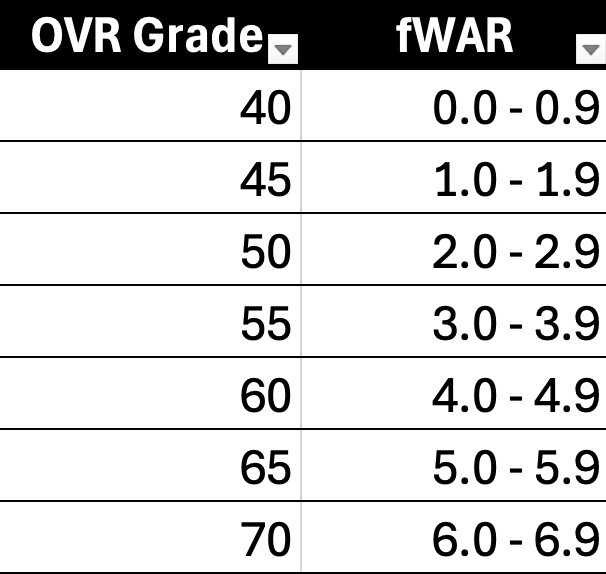
*All stats and metrics are accurate as of 8/16/2026
Role 60
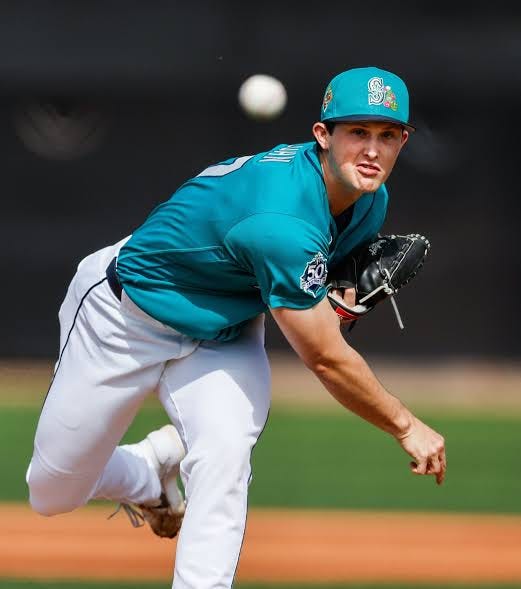
Ryan Sloan RHP (20 – AA)
Fastball: 65 | Cutter: 50 | Sweeper: 60 | Splitter: 60 | Command: 55
The best pitching prospect in all of baseball, Sloan looks the part of a true 1/1 ace. He threw 6 perfect innings on May 30th with 11 strikeouts, showing off the incredibly rare potential he has on the mound. Before we dive into Sloan’s arsenal and mechanics, let’s address the elephant in the room. Yes, I have Sloan ranked ahead (albeit, marginally) of Kade Anderson. While Anderson’s season has been nothing short of spectacular, Sloan’s performance in Double-A has been impressive in its own right, and there are a couple of important variables to keep in mind. Sloan is a year-and-a-half younger than Anderson, and therefore has more projection remaining, indicating that he will have the better stuff at maturity. Sloan is also built like a tank (6’5, 220 lbs.), giving him a level of power that Anderson just cannot compete with. In addition, Sloan’s superior build increases my confidence that he can be a workhorse at the next level. The difference between them is marginal (I have them ranked in the same tier, after all), but these are the reasons why I am giving the edge to Sloan at this time.
Sloan sits in the mid to upper 90s with a lethal heater that will surpass 100 mph on occasion. He throws both a 4-seam fastball and a sinker, and each are effective. The 4-seam gets plenty of vertical carry at the top of the zone, and combined with its premium velocity, hitters are pretty much helpless against it. The sinker has tight downward horizontal action and gets in on the hands of righties, inducing plenty of groundballs. Sloan also shows the ability to freeze right-handed batters by back-dooring the pitch in two-strike counts. He’ll front-hip the sinker to lefties, getting plenty of called strikes on the inner-third, and he has a decent low 90s cutter that keeps left-handed batters off his 4-seamer at the top of the zone. Sloan’s ability to locate his fastballs to different quadrants of the strike zone with precision is well beyond his years, and reveals his advanced feel for pitching.
An examination of Sloan’s secondary offerings has to begin with his devastating splitter. Sloan’s splitter sits in the low 90s with plenty of depth, and the sudden downward action of the pitch often leaves opposing hitters looking rather silly as they chase after it helplessly. Sloan is also able to land the pitch for strikes in the bottom-third, and there is enough velocity separation from his fastball that hitters are often well out in front of the pitch when it is in the strike zone. Equally impressive is Sloan’s breaking ball. Classified as a sweeper, Sloan shows feel for manipulating it’s shape, adding/subtracting depth and horizontal break as needed. He gets plenty of swing-and-miss on the pitch in-zone, and hitters regularly go fishing for it out of the zone as well. Both pitches project as plus, and Sloan’s ability to command them in and out of the strike zone at will is incredibly impressive for a 20-year-old.
Sloan’s delivery and mechanics are as good as ever. His motion is buttery smooth, and it is baffling how low effort his arm action is given that his fastball approaches 100 mph. Sloan gets down the mound well, allowing his already plus stuff to play up in games, and he tunnels his offerings from a low release height that makes him all the more deceptive. There just are not any holes to poke in Sloan’s profile. He keeps the ball on the ground at a good clip (52.6%), he gets strikeouts (29.8%), he doesn’t walk anyone (4.2%), and he has a diverse arsenal of offerings that give him a multitude of ways to attack hitters and get them out. He gets swing-and-miss in the zone. He gets swing-and-miss out of the zone. He is as complete of pitching prospect as you could ask for, and he’s performing well (3.40 FIP) at a level where he is 4 years the junior of the average opponent. If it were up to me, I would already have Sloan penciled in Seattle’s 2027 Opening Day rotation. He is that good.
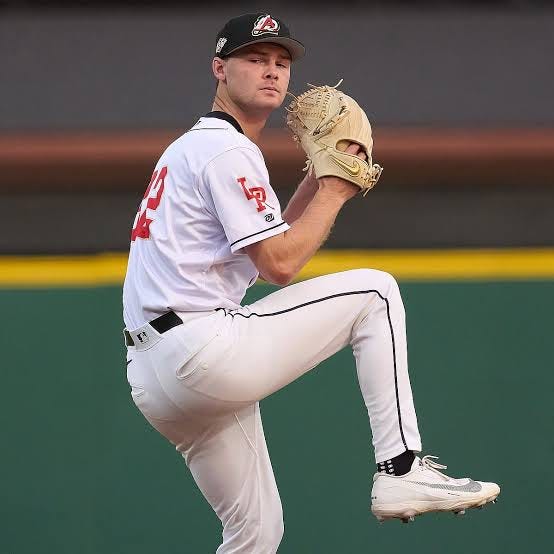
Kade Anderson LHP (22 – AA)
Fastball: 55 | Slider: 60 | Curveball: 60 | Changeup: 60 | Command: 60
Mr. Anderson? Just call him Neo, because when you are finished facing him, you will feel like you’ve just come out of The Matrix. With plus command and three plus secondary offerings, Kade Anderson has the deception and strike throwing of a crafty left-handed pitcher and the exceptional stuff of a frontline starter. It’s a very special skillset that is undoubtedly the fuel behind his remarkable season in Double-A this year. Sporting a sparkling 1.78 FIP in 2026 (no, that’s not a typo, you read that right), Anderson’s absurd performance has solidified him as the top left-handed pitching prospect in all of baseball. He has struck out over 40% of his opponents while walking less than 5%, good for a K%-BB% of 36.6%, which is just one of the many mind-bending facts about Anderson’s 2026 season.
Diving into his arsenal, Anderson’s changeup is his best pitch. It sits in the mid 80s and has impressive fading action, eliciting plenty of feeble hacks outside of the strike zone from right-handed hitters. What stands out most in Anderson’s profile, though, is the step forward both of his breaking balls have taken this year. His mid 80s slider is tighter and sharper, featuring quality two-plane break, while his upper 70s curveball has more depth and downward break, allowing Anderson to hammer it below the zone for whiffs. Both pitches are getting whiffs consistently in the zone as well, which was not the case when Anderson was at LSU. The potency of Anderson’s secondary offerings, in addition to his exceptional command, allows his fastball to play up beyond its modest velocity. Sitting 92-95 mph, Anderson’s heater has nice zip on the top rail, and there is added deception thanks to the smoothness of his operation. While the fastball is capable of missing bats, the pitch is only above average on its own, as neither the velocity nor the shape of the offering jumps off the page. The fastball performs exceptionally well in games primarily because Anderson rarely ever leaves it over the middle of the plate. This makes it much more difficult for opposing batters to square-up the heater and do damage against it.
I love Anderson’s rhythm and athleticism on the mound, and each point to his plus command translating to the big leagues. He repeats his delivery consistently and throws all his offerings from the same arm slot, adding to his deception. His mechanics are clean, and I see nothing that says Anderson could not handle pitching to big league hitters right now. His ability to spot all 4 of his offerings wherever he wants at will is incredibly special and is the primary reason why Double-A hitters cannot touch him.
Like Sloan, Anderson projects as a true frontline starter. There is some concern that the mediocre fastball velocity will prevent Anderson from reaching this outcome, but given the caliber of his secondary offerings and strike throwing, I’m not particularly worried about this. What is more concerning to me is Anderson’s injury history (he had Tommy John surgery back in 2022 as a junior in high school). There is nothing in Anderson’s delivery to indicate that he is going to have issues with longevity, but the surgery is noteworthy. At the very least, it is a minor mark against Anderson that makes the delineation between himself and Sloan clearer. To be sure, these kinds of variables are only relevant when trying to distinguish between two prospects of equal caliber. Regardless, the Mariners have the two best pitching prospects in all of baseball, and Sloan and Anderson should slot into the top of the major league rotation in short order.
Role 50
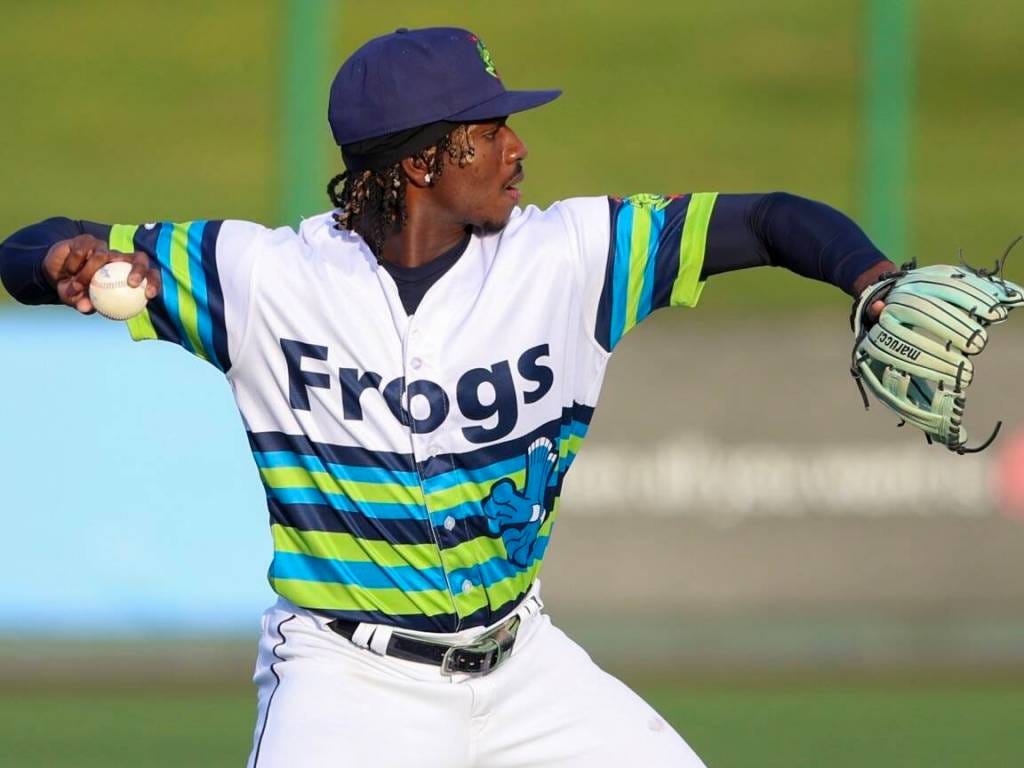
Felnin Celesten SS, S/R (20 – AA)
Hit: 50 | Plate Discipline: 45 | Game Power: 50 | Raw Power: 55 | Run: 55 | Arm: 55 | Field: 55
A dynamic, up-the-middle prospect, Celesten has a sky-high ceiling. While there are not any surefire plus tools here, Celesten has a chance for above-average impact on both sides of the ball at a premium position. His contact rates took a massive jump forward this year in A+ (69% to 76%) as did his power production (.132 ISO to .220), earning himself a promotion to Double-A before his 21st birthday, where he is nearly four years younger than the average player. While there are still a couple of adjustments that need to be made for Celesten to reach his potential, his outlook is much more stable than it was this time a year ago, and it’s easy to see him having an impact on a big-league team in the not-too-distant future.
Starting on defense, Celesten’s consistency with the glove at shortstop has gotten better with time, and combined with his above-average athleticism, it’s easy to see a quality shortstop. He routinely makes strong and accurate throws from a variety of angles, and he looks equally comfortable moving to his left and right to make plays. His footwork and mechanics have improved, meaning that Celesten is no longer relying purely on his natural talent to make plays or overcome fundamental shortcomings. Celesten’s glovework is certainly his strongest attribute and is the one tool of his that has the potential to become plus in the future.
Celesten has similar swings on the left and right-side of the plate with some small differences. As a lefty, Celesten uses an inward leg kick to rotate into his back hip, crunching down slightly in the process. His hand load is quite deep, which creates a longer path for him to get back to the baseball. However, Celesten has impressive bat speed that allows him to overcome this. His left-handed swing is geared more for line drives than fly balls, and this tends to be the side he makes the most contact from, as the flatter path makes it easier for him to square-up the baseball consistently.
As a righty, Celesten employs a similar move to load onto his backside and get his hands in the ready position, though it is less extreme than the lefty swing. His righty swing works through the zone more vertically than his left-handed swing does, making it easier for him to pull the ball in the air from this side of the plate. The uppercut nature of his right-handed swing leads to more fly balls and greater power production but also results in higher swing-and-miss rates. Both swings work for Celesten, and while the differences between them are notable, Celesten has performed admirably against both left and right-handed pitching to date.
The next step for Celesten will be advancing his plate discipline skills, which need some work. Offspeed pitches below the zone are particularly difficult for him to lay off, and Double-A pitchers have attacked him aggressively here. For Celesten to get to his above-average power potential in games at the upper levels of the minors and beyond, this is an improvement he will have to make. Given the massive leap Celesten took from 2025 to 2026, I am confident he will be able to make the necessary adjustments to his game to keep progressing as a player.
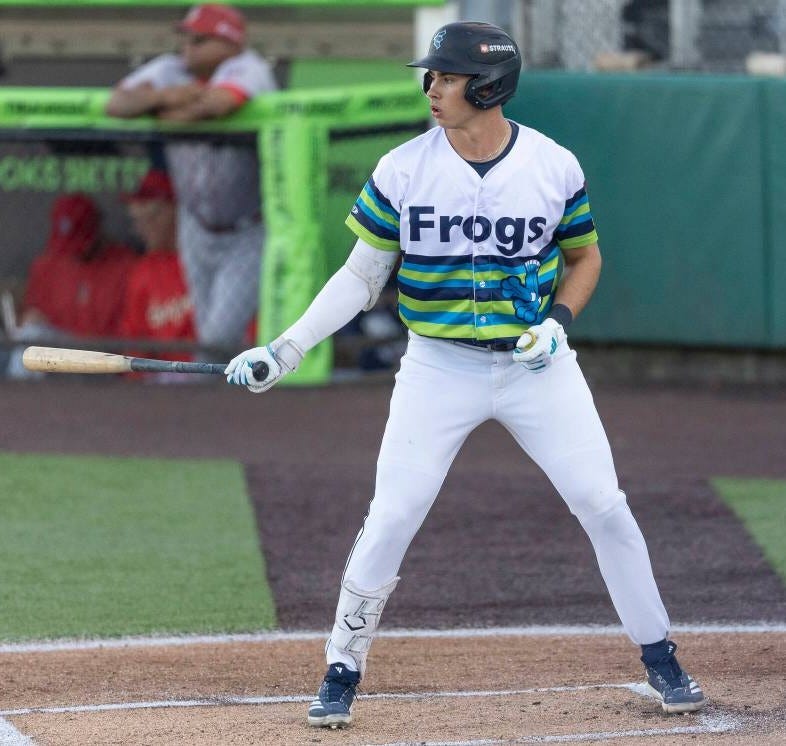
Jonny Farmelo OF, L/R (21 – AA)
Hit: 45 | Plate Discipline: 55 | Game Power: 50 | Raw Power: 60 | Run: 65 | Arm: 55 | Field: 55
One of the most tooled up and unique profiles in the system, Farmelo still carries the star potential he had when the Mariners drafted him back in 2023. And while injuries prevented his career from taking off as early as he would have liked, Farmelo is one of the best position player prospects in the Mariners farm system. With easily plus speed and future plus raw power, Farmelo has a chance to be a dynamic centerfielder. He also has enough complementary skills that it’s easy to see him turning into a solid everyday contributor in the majors one day, even if he doesn’t ever quite get to his ceiling.
In the box, Farmelo rests the bat on his shoulder, with the barrel parallel to the ground, and he uses a bigger leg kick to load onto his backside. All of this together results in a longer swing that does lead to stretches of elevated swing-and-miss. However, Farmelo’s strike zone coverage has gotten much better this year, and his power has shown up more in games. While Farmelo will likely never run above-average contact rates as a big leaguer, the early returns in Double-A have been promising (84% zone-contact). Farmelo’s swing has natural loft, which helps him get the ball in the air without forcing it to happen. He rotates through the ball well and shows feel for launching the ball in the air. Farmelo doesn’t pull the ball in the air quite enough to maximize his raw power in games, but it’s easy to see 20+ homer campaigns as a big leaguer. His plate discipline skills are also developing nicely, and he looks like someone who will run a double-digit walk rate in the majors. Farmelo has the skills needed to be both an on-base and power threat at the next level. It’s a potent offensive profile.
On defense, Farmelo should stick in centerfield long-term. His elite speed gives him impressive range in all directions, and his feel for the position has improved with the consistent reps he has gotten this year. Now fully healthy, the governor is off, and Farmelo is blazing around the basepaths again, with 33 steals so far this season. Given how 2026 is shaping up to be Farmelo’s first full season, it is quite possible he still has another big jump in performance left in him, and it would not surprise me at all if I were moving him into the role 55 tier this time next year. He’s an exciting player, and now that he has been able to stay on the field consistently for the first time in his career, it is much easier to see his skills translating to the big leagues. Continuing to refine his swing and improve his zone-contact rates, particularly against breaking balls, will be the key to Farmelo taking the next step up in his career to Triple-A.
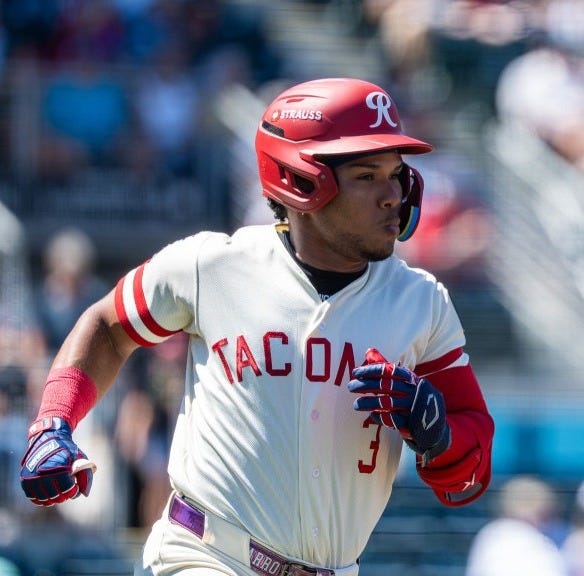
Michael Arroyo 2B/LF, R/R (21 – AAA)
Hit: 55 | Plate Discipline: 45 | Game Power: 50 | Raw Power: 55 | Run: 50 | Arm: 45 | Field: 45
Arroyo is knocking on the door of the major leagues thanks to year of strong all-around performance. His contact rates have never been better. This is the first year of Arroyo’s career where he has posted a contact rate above 80%, and he is doing it at the hardest levels of the minor leagues. Even more impressive are his zone-contact rates, which have sat just under 90% at both AA and AAA. He is doing this all the while posting a .187 ISO between the two levels and solid power metrics at each stop as well. Of all the quality position player prospects in Seattle’s farm system, Arroyo is the one I would peg as being the most likely to be an above average hitter at the major league level.
Starting with his hands just below his shoulder, Arroyo uses a slight barrel tip to get his hands in the ready position. A small leg kick is used to shift his weight onto his back leg, at which point Arroyo’s lightning quick hands whip the barrel through the zone. Arroyo gets his foot down on time consistently and is almost never late to the contact point. He gets the barrel to the baseball with ease and has the ability to wait on pitches and flick them to right center with an inside-out swing. His hand-eye coordination is impressive, as there are times when Arroyo will be fooled by a pitch but is still able to adjust to it and do damage. These are the kinds of soft skills that will make Arroyo’s transition to the big leagues easier than it would be for most.
Though Arroyo has the requisite power and feel for lofting the ball pull-side to be a 20-homer threat in the majors one day, he will have to continue to refine his plate approach to do so. He gets into stretches where, because of his advanced bat-to-ball skills, he becomes hyper aggressive at the plate and expands the strike zone too frequently. This results in non-optimal contact that makes it difficult for him to hit the ball hard on a consistent basis. Becoming more patient at the plate is the key, as Arroyo’s pitch recognition is certainly not at fault. He’s had a more patient approach in the past, and it is possible he eventually decides to sacrifice some contact in order to be more disciplined and maximize his power production.
Defensively, while Arroyo is unlikely to make much of an impact, he has added some versatility to his profile. He began to get playing time in the outfield during Spring Training, and that has continued during the season. As the year has gone on, he has looked more and more comfortable playing in left and projects just about as well there as he does at second base. Arroyo doesn’t have much difficulty tracking the ball, and his reads and routes are about as good as you could expect for someone playing their first professional season in the outfield. At second, his range is good, but his hands and actions are not the most consistent. His arm strength is adequate for the position, as it is in left field. In any case, Arroyo will be relying on his bat to provide the lion’s share of his value as a big leaguer. Given that it has carried him this far, there is little reason to think that it will not be able to do so.
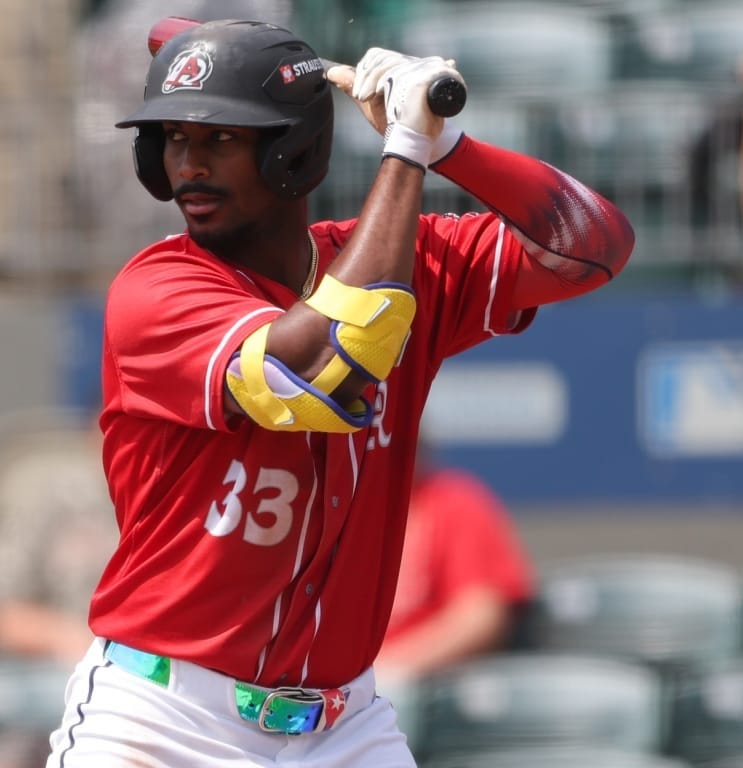
Lazaro Montes OF, L/R (21 – AAA)
Hit: 40 | Plate Discipline: 50 | Game Power: 65 | Raw Power: 70 | Run: 45 | Arm: 60 | Field: 40
The range of reports you will read on Montes are rather wild. Some evaluators see a future superstar who hits 40+ homers every year. Others see a Quad-A player who won’t hit enough to provide value as a big leaguer. While I agree that both options are possible outcomes for Montes, I find myself in the middle. While he may not run a strikeout rate below 30% as a big leaguer, Montes hasn’t shown any signs of slowing down either. When he gets the barrel to the baseball, he launches it into outer space. Some of the home runs he hits are absolutely absurd, and if he had any more projection on his frame, I would be inclined to give him an 80 raw power grade.
As expected, Montes’ swing is on the longer side, and its loopy nature means he can have difficulty covering fastballs on the top rail of the zone. However, he has plenty of bat speed and doesn’t have any trouble doing damage on pitches on the inner-third of the plate. He routinely punishes pitches left over the middle and is plenty capable of drawing a walk (though his overall plate discipline sits closer to average). His leg kick has gotten smaller over time, and this simplified move in the box is at least partly responsible for Montes’ game power reaching a whole new stratosphere this year (his ISO starts with a 3). He has good feel for the barrel and can hit the ball out to any part of the park, but his ability to launch the ball pull-side increases his chances of getting to his power in the majors. Ultimately, the high swing-and-miss rates will probably prevent Montes from ever reaching his true power potential in games, and his overall profile is likely to have a longer adjustment period to MLB pitching. Even in the minor leagues, Montes’ first couple of weeks at a new level have always been a bit of a challenge. Still, I have confidence that Montes will eventually settle into a role as a middle-of-the-order masher.
The work that Montes has put in the outfield to improve his fielding should not go unnoticed. Long thought to be a DH only player, Montes now looks like an acceptable outfielder. While his range is below average, Montes’ reads and routes have gotten considerably better, and his improved throwing accuracy means his plus arm is a legitimate weapon for him in right field. I do want to be cautious projecting continued improvement, but I think there is a world where putting a 40 on his fielding is too low. Additionally, Montes’ baserunning is impressive for someone his size. He takes tight turns around the bases, which allows him to go first-to-third and second-to-home more often than is expected of a player with his footspeed, which will likely become below average at some point. He runs hard out of the batter’s box and ends up with his fair share of hustle doubles as a result. I do not anticipate him being too much of negative on the basepaths in the majors, regardless of what his sprint speed is. When talent is equal, work ethic can make a big difference. Ultimately, it’s the personal commitment Montes has shown for improving himself as a player in any way he can that gives me confidence he will find success in the big leagues.
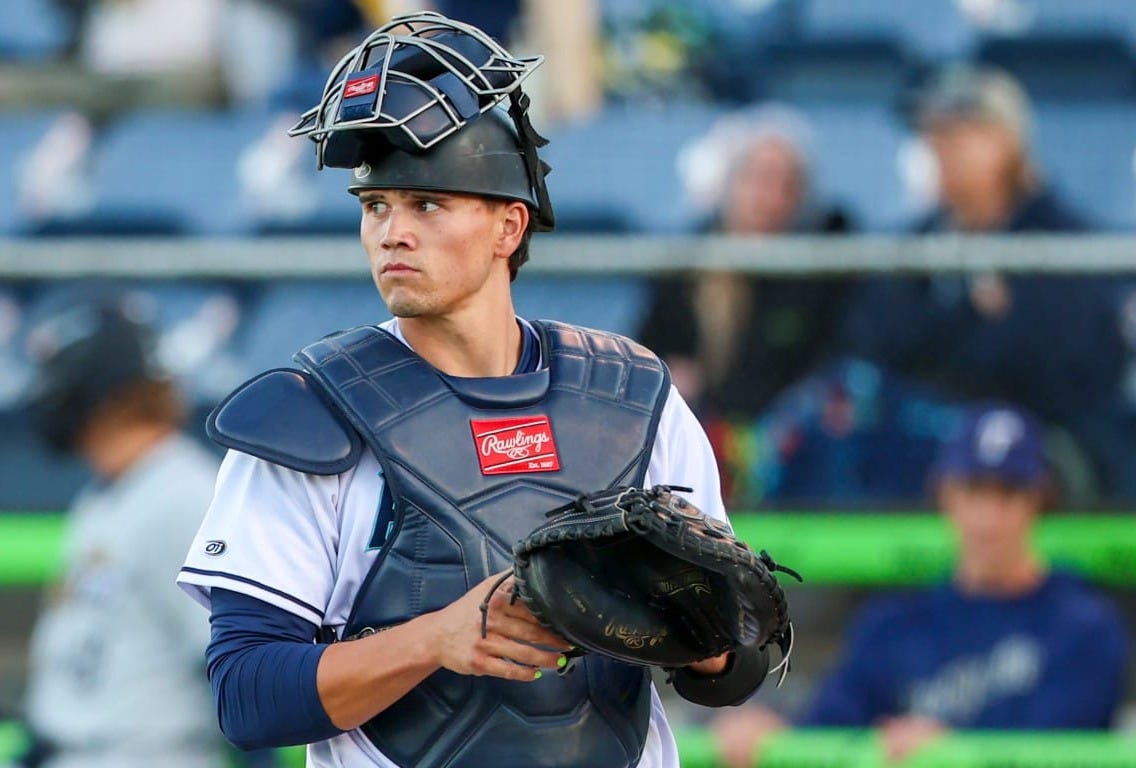
Luke Stevenson C, L/R (22 – A+)
Hit: 40 | Plate Discipline: 60 | Game Power: 55 | Raw Power: 60 | Run: 40 | Arm: 60 | Field: 55
The second player selected by the Mariners in the 2025 draft, Stevenson has gotten his professional career off to a flying start. After quickly silencing concerns about his pitch recognition, Stevenson has found his power stroke, launching 10 home runs since the beginning of July. His plus plate discipline is allowing him to draw walks at an absurd clip (21.5%) and, along with the above average game power, gives Stevenson the look of a true-three-outcomes backstop.
Stevenson’s swing has plenty of natural loft, and his propensity for hitting pull-side fly balls (27.7% pull-air rate) means he gets to most of his power in games. He makes optimal contact frequently, rarely ever putting the ball on the ground. This is fueled by Stevenson’s feel for the barrel and his keen eye (chase rate below 20%), which helps him swing at the right pitches. While Stevenson’s K rate sits at an uncomfortably high mark (28.4%) for a 22-year-old in High-A, this is caused in part by his patient (borderline passive) plate approach, in which he works himself into a lot of deep counts. Over the past six weeks, Stevenson has become more aggressive within the strike zone, leading to more balls put into play, as well as being responsible for his power surge. Still, swing-and-miss will always be a part of his game, particularly against in-zone breaking balls. Stevenson’s contact rates against such offerings will have to continue to improve for him to succeed against tougher competition.
The most impressive thing about Stevenson’s season so far are the adjustments he has made in the batter’s box. His rotation through the baseball (especially with his upper half) is much better than it was during his college days, as is his balance at the plate. He is more stable on his backside through impact, which is part of the reason why his exit velocities have jumped forward despite having mostly filled out his frame. The fact that Stevenson has made these adjustments in-season while maintaining his advanced plate approach make them all the more impressive. It also makes me hesitant to put any kind of a ceiling on him.
Stevenson’s improvements with the bat are made even more valuable by the fact that he plays the most demanding and important position on the field. His receiving and framing behind the plate are strong, and he shows the ability to control all four edges of the strike zone exceptionally well. Stevenson’s skills in these areas are already close to major league average and would be playable at the level today. While he will need to improve his mobility behind the plate, Stevenson has plus arm strength, and his pop times have gotten better as the year has gone on, pointing to him being at least average at controlling the running game in the future. The one area where improvement will be required is with Stevenson’s blocking, which is currently a bit below average. Again, improved mobility would go a long way here, and given his feel for playing the position, I’m not going to be putting any ceiling on Stevenson’s catching. He has a legitimate chance to become a plus defender behind the plate. Catchers with 60-grade plate discipline and raw power and this level of defensive upside do not grow on trees, making Stevenson one of the most intriguing prospects in Seattle’s system. I would be surprised if he does not start appearing on Top 100 prospects lists this time next year.
Role 45
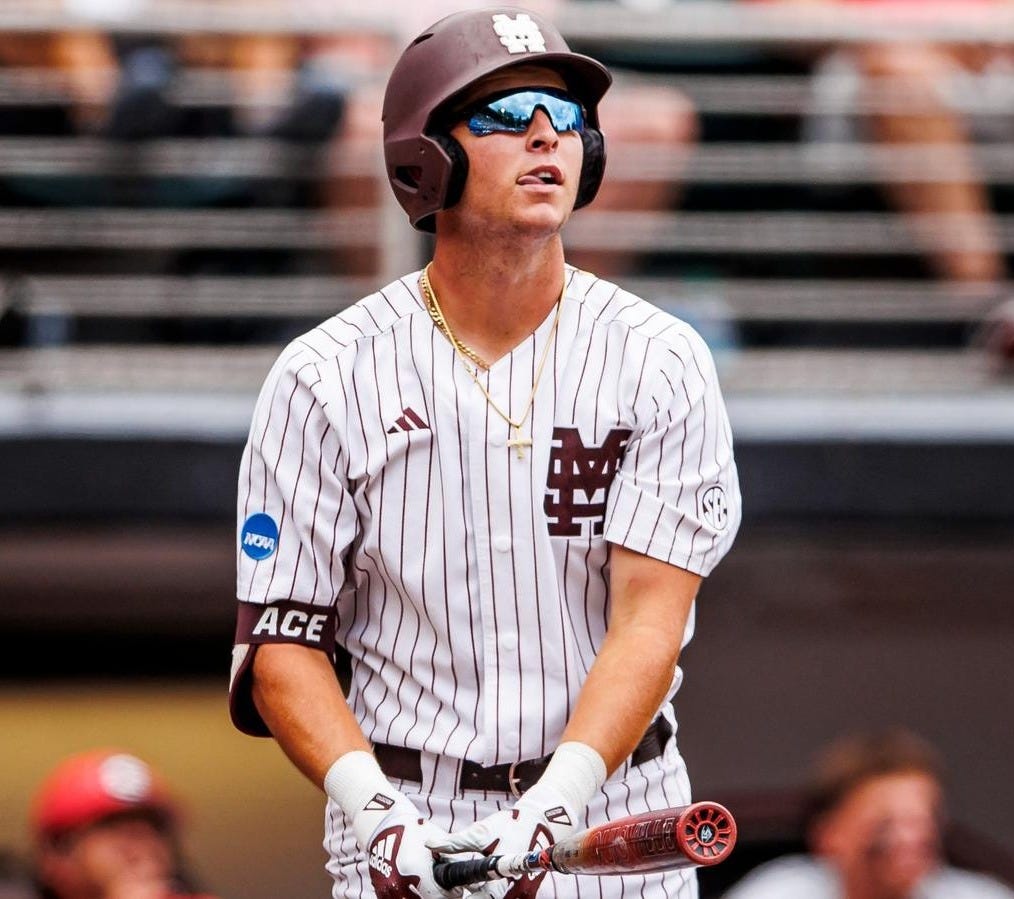
Ace Reese 3B, L/R (21 – A)
Hit: 45 | Plate Discipline: 45 | Game Power: 55 | Raw Power: 65 | Run: 45 | Arm: 50 | Field: 45
The following is my 2026 draft writeup on Reese:
“Still settling into a plate approach, the one thing that is for sure with Reese is that he will hit a lot of home runs. With easy plus raw power that he gets to in games, Reese has legitimate all-fields power. He consistently drives the ball in the air, posts strong barrel rates, and has feel for hitting pull-side fly balls. His short, quick swing with natural loft helps him here, and he has adjustability in his bat path that allows him to get the barrel to different zone locations. All the ingredients for 30 homer seasons are here. He routinely stays inside the baseball and posts acceptable zone-contact rates for a player with his power, alleviating concerns that he’ll be an all-or-nothing hitter at the next level.
What will need to improve, however, is his plate discipline. He too frequently chases pitches outside the strike zone, and while his approach was more patient in 2026, it led to Reese getting into deeper counts more regularly, causing his strikeout rate to tick up. Most of Reese’s whiffs come on pitches outside the zone, so learning how to stay within himself and hunt pitches in his damage zone will be key for him as he takes the step up to the pro ranks.
Defensively, Reese will slide over to first base at some point. His lateral range and overall quickness are below average at third base, and his footwork and fundamentals could use some work as well. Though he does have decent arm strength, he does not possess the speed to be an average defender in an outfield corner. To be sure, he’ll get playing time at all these positions in the minor leagues as a team tries to increase his defensive value, but first base will ultimately be his spot in the big leagues. Reese will have to really hit to be a regular contributor in the majors, but I believe he is more than capable of doing exactly that.”
One notable piece of information that has come out after the draft process is that Reese was dealing with a foot injury during the 2026 season, which likely factored into his poor fielding. As such, I have him as a 3B only for now, though I still think a move to first base is a possibility. Additionally, it will be interesting to see what adjustments the Mariners have Reese make to his plate approach. They’ve had success in the past with reining in the aggression of power-over-hit players (Cal Raleigh and Lazaro Montes most notably). Hopefully, they will be able to help Reese make similar improvements to his game.
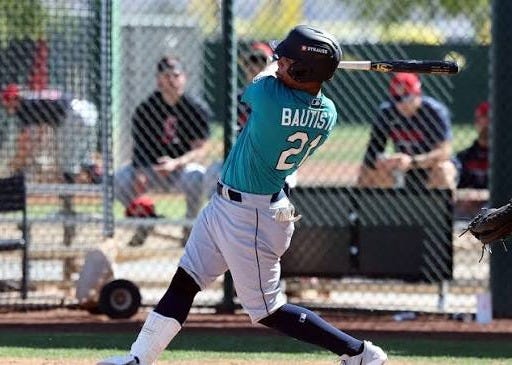
Yorger Bautista OF, L/L (18 – A)
Hit: 40 | Plate Discipline: 40 | Game Power: 60 | Raw Power: 80 | Run: 60 | Arm: 60 | Field: 50
Bautista proved that his nickname (“The Beast”) is fitting this year in the Arizona Complex League. As an 18-year-old, Bautista posted a 116.9 mph max exit velocity and a 109.3 mph 90th percentile exit velocity. At the MLB level in 2026, only Oneil Cruz, Yordan Alvarez, and Bobby Witt Jr. have hit a ball harder, and Bautista’s 90th percentile EV would currently sit between Shohei Ohtani (109.4) and Fernando Tatis Jr. (109.2). That is absolutely ridiculous for any prospect, let alone an 18-year-old. Bautista already has 70-grade raw power and given how young he is, it’s easy to see him reaching the very top of the scale at maturity.
Bautista has already shown feel for getting to his incredible raw power in games, posting a very solid barrel rate (13.3%) in the ACL this season. He knows how to pull the ball in the air and is also plenty capable of launching it to the opposite field. Additionally, Bautista is a plus runner who has centerfield viability. While his feel for the position needs work, he’s also young enough where seeing this improve is still very much a possibility. At minimum, he will be an above-average corner outfielder, most likely in right field, where his plus arm strength works well. Bautista has added muscle and gotten stronger over the past calendar year (at no cost to his athleticism), but he still has considerable projection remaining. It’s possible he loses some speed as he continues to mature and fill out his frame.
To reach his lofty ceiling, Bautista’s bat-to-ball skills and plate discipline will have to take a couple steps forward. His set-up in the box is very noisy and there are a lot of moving parts in his swing, leaving him off balance at times. Despite this, Bautista’s contact rate improved this year while moving up a level from the DSL to the ACL (57.9% to 65.6%). His quick hands and plus bat speed allow him to cover fastballs in all quadrants of the strike zone, and even though his ACL contact rate is lower than I would like, that jump forward tells me Bautista is capable of making adjustments. This is critical to see when you’re projecting growth in a player’s hit tool.
As for his plate discipline, Bautista will have to get better at recognizing breaking pitches. Presently, he has a difficult time laying off spin below the zone and struggles to make consistent contact against in-zone breaking balls. Like with his bat-to-ball skills, Bautista has improved some here compared to where he was a year ago, and I think it is reasonable to expect further growth in the future. Regardless, even if Bautista’s hit and plate discipline tools are below average, he has the barrel feel and raw power to mash in games anyway. Combine that with his other impressive tools, and the future is incredibly bright for The Beast.
Role 40+
Juan Rijo OF, L/L (17 – DSL)
Hit: 50 | Plate Discipline: 50 | Game Power: 45 | Raw Power: 50 | Run: 55 | Arm: 55 | Field: 50
The Mariners top signing in the 2026 International Class, Rijo has gotten his professional career off to a strong start with a solid Dominican Summer League season. With a smooth left-handed swing, Rijo makes loads of contact to all fields. He uses an inward leg kick to load onto his backside and rotates cleanly through the baseball. It’s a simple move that allows Rijo to be on time consistently. His hand load is a bit deep and the bat speed at this point is not exceptional, so it remains to be seen how Rijo will fare against premium velocity. He’s plenty projectible, so it’s likely the bat speed improves with time as he matures and fills out his frame. He has good awareness of the strike zone and impressive feel for the barrel, launching pull-side fly balls during batting practice. Bringing this ability into games will be the next step for Rijo, and there isn’t anything in his swing that says he won’t be able to do so.
This is the highest I rank International prospects whom I have not seen play live yet, but my anticipation is that Rijo will find himself in the role 45 tier once I do, which is why he sits at the top of the role 40+ tier now. There are conflicting reports regarding his defense, which is something I am looking forward to assessing myself. Some peg him as a corner outfielder, while others think he will be an above-average to plus centerfielder. For the time being, I have him graded as an average centerfielder (above-average in a corner), but that serves as more of a placeholder until I see him play. He grades out well as a runner, so I imagine that he should be able to cover enough ground in the outfield to play at least a decent centerfield. His arm strength and accuracy show well on video, and I am excited to watch Rijo during 2027 Spring Training.
Mason Peters LHP (22 – A+)
Fastball: 50 | Slider: 50 | Curveball: 60 | Changeup: 45 | Command: 50
After Sloan and Anderson, Mason Peters is far and away the next best pitcher in the system. With an elite curveball, Peters has already established a floor for himself as an impact big-league reliever. Beyond that lies plenty of upside, ranging from multi-inning swingman to starting at the back of a rotation. While there are several things that need to go right for that latter outcome to be reached, Peters has proven that it’s at least a possibility. He has dominated A-ball hitters this year, striking out 35% of batters faced while only issuing free passes 6% of the time. He’s keeping the ball on the ground at an elite rate (58%) and the quality of contact generated against Peters has been poor. There is a lot to like.
Everything on the mound starts with Peters impressive curveball. Sitting in the upper 70s, the pitch has sharp downward break and depth, generating a quality 1-7 shape. Peters’ command of the pitch is virtually impeccable. He can just as easily land it for strikes as he can bury it in the dirt to left and right-handed hitters alike. Batters look helpless against the offering, and if they do happen to make contact, it’s usually of the groundball variety. Peters’ fastball sits 91-93 mph and touches 95, featuring good life and carry at the top of the zone. While the mediocre velocity on the pitch will likely prevent it from generating elite swing-and-miss rates, its movement makes it very difficult for hitters to square-up. Peters’ fastball generates plenty of grounders and lazy fly balls, giving me confidence it will continue to be effective against tougher competition.
What jumps off the page watching Peters this year is the way his other two offerings have progressed. His low 80s slider has some sweeping action and depth, and Peters command of the pitch has taken a step forward as well. He can throw it for strikes or use it to expand the strike zone. It gets whiffs and hitters struggle to square-up the offering. While Peters’ changeup is still inconsistent, the action of the pitch when executed is much improved. It fades away from right-handed batters and has depth that allows it to play well of the fastball. It now looks like Peters will have four usable offerings against major league hitters.
Throwing from a high ¾ arm slot, Peters delivery is repeatable, and he throws plenty of strikes with his two primary offerings. He gets down the mound well, giving him good extension and a low release height that adds deception to his operation. However, there is effort in Peters’ delivery that can cause some command inconsistencies at times. His motion will speed up on him at times, causing him to leave his front-side open. This results in misses up and to his arm-side, mostly with the fastball and changeup. Continuing to refine his operation on the mound will be key for Peters to reach his ceiling. The other concern here is Peters’ slight build (5’11, 175 lbs.). When combined with the effort present in Peters’ arm action, it’s difficult not to see a reliever here. However, Peters has taken notable steps forward over the past calendar year, and I feel like betting against him continuing to improve is a foolhardy endeavor. Peters should at least have value as an up-down depth starter, and he has the elite swing-and-miss pitch needed to profile as a high-leverage bullpen arm as well. Regardless of the role, I see Peters racking up plenty of big-league innings in the future.
Korbyn Dickerson OF, R/R (22 – A+)
Hit: 45 | Plate Discipline: 45 | Game Power: 45 | Raw Power: 60 | Run: 60 | Arm: 55 | Field: 55
Dickerson was the best value pick in the 2025 draft by my board. Ranked 71st overall, the Mariners were able to snag Dickerson in the 5th round with the 152nd pick. It was tremendous value, and Dickerson has done nothing but prove that pick was a steal. He’s performed well at both A-ball levels and is starting to show improvement in his bat-to-ball abilities and plate approach. While further growth in these areas has to occur before I give Dickerson an everyday grade, he has shown me enough to feel confident in my initial evaluation of a high-end role player with everyday upside.
In the box, Dickerson’s swing is still a bit long and aggressive, taking big hacks with a slight uppercut path. Dickerson has the requisite bat speed to compensate for this on most occasions, and his improved performance against in-zone fastballs is encouraging. His feel for the barrel and driving the ball on a line has gotten better as well. He does tend to pull off spin in the lower-third of the zone, and while he is not whiffing on these pitches nearly as much as he did in college, the contact quality isn’t great. The lack of impact against quality breaking pitches does make me concerned about how much of his raw power he will be able to get to in games, as does his tendency to chase after spin from RHP. Dickerson’s platoon splits indicate such a struggle, as his OPS against left-handed pitchers (1.231) is over 500 points higher than his OPS against right-handers (.704). The good news here is that Dickerson has absolutely annihilated LHP, which is the primary reason I feel pretty strongly that he will at least be a valuable platoon outfielder in the majors.
Dickerson’s best attributes are still his speed and defense. He’s a plus runner who is aggressive on the basepaths but also efficient, stealing 31 bases on just 37 attempts. Dickerson looks very comfortable out in centerfield, easily ranging to both his left and right to make plays. He tracks the ball well and takes good routes, rarely ever having to use his plus speed to overcome a mistake. The top-end outcome here is a 20/20 centerfielder with impact baserunning and defense, and while Dickerson’s most likely path to adding value to a major league roster is as a 4th/platoon outfielder, not many players with that median projection have Dickerson’s level of upside or defensive value. He’s a fun watch, and I am eager to see how quickly he can get himself to Double-A.
Jake Brown OF, L/L (21 – A)
Hit: 50 | Plate Discipline: 45 | Game Power: 45 | Raw Power: 55 | Run: 55 | Arm: 55 | Field: 50
The following is my 2026 draft writeup on Brown:
“With a smooth left-handed swing and feel for the barrel, Brown has a real chance to become an impact hitter at the major league level. Brown can hit the ball to all fields, but his ability to loft the ball pull-side stands out the most. He has above average raw pop, though his aggressive approach can prevent him from getting to his power in games consistently. Brown’s swing is compact, and his quick hands help him to make a copious amount of in-zone contact, particularly against fastballs. Brown has struggled to hit left-handed pitching, so he may only be a platoon outfielder in the long-term, which does limit his median projection somewhat. As long as he can continue to refine his approach and improve his performance against secondary offerings, like he has each year in college, he’ll have a chance to carve out a regular role for himself in the big leagues.
Defensively, Brown profiles best in right field, though he is capable of playing a passable center field. He has above average speed and solid arm strength with accuracy to match and looks like a quality defender in a corner spot. Brown doesn’t use his speed to steal many bases, and his baserunning in general leaves a little to be desired. Brown’s future outcome relies heavily on his bat, but it projects to be a good one at the next level.”
Like with Reese, I’m interested to see how Brown’s approach changes with the Mariners. Becoming more patient in the box and swinging at better pitches would improve his quality of contact, likely resulting in a half-grade more game power. He has good feel for the barrel and lofting the ball, it’s just a matter of swinging at the pitches he can actually do damage with. He’s another player I can’t wait to see at Spring Training next year.
Boston Smith C/OF, L/R (23 – AA)
Hit: 40 | Plate Discipline: 60 | Game Power: 55 | Raw Power: 55 | Run: 45 | Arm: 50 | Field: 45
Acquired in the Luis Castillo trade at the 2026 deadline, Smith is a huge up-arrow prospect. Drafted in the 6th round of the 2025 draft by the Nationals, Smith has already been traded twice in his professional career. That hasn’t slowed him down any, though. He’s done nothing but mash at every level of the minor leagues, and that has continued with Seattle’s Double-A affiliate in Arkansas. Given the elite discipline, feel for hitting pull-side fly balls, and the defensive upside, Smith has a wide range of ways he can provide value at the next level.
In the box, Smith’s swing has incredible loft that allows him to hit the ball in the air with ease. While this also comes with swing-and-miss, Smith is able to make up for that by smashing balls over the right field fence. His barrel feel is tremendous, and he is running an absurd 37% pull-air rate between High-A and Double-A this year. All of this points to a player who gets the most out of their raw power in games. Additionally, Smith has proven that his elite plate discipline is real, as he has maintained a chase rate below 20% at Double-A. It’s quite possible the plate discipline is better than plus, but I do want to be careful because Smith has a passive plate approach (36% swing rate) that certainly helps buoy his metrics in these areas. Assuming Smith can continue to make a decent amount of zone-contact (78% in AA right now), he should be able to make this approach work for him in the big leagues.
There is work to be done for Smith to stick behind the plate long term. His receiving is inconsistent, and his presentation of the baseball needs to improve. Breaking pitches will pop out of his glove at times, and he has dropped the occasional center-cut fastball too. He is good at framing fastballs on the top rail, but his control of the other three edges of the strike zone is lacking. Smith’s blocking shows promise, and he moves around well behind the plate. He is certainly athletic enough to catch. Smith controls the running game acceptably, though he is somewhat limited by his average arm strength. Even in the ABS-era, I will argue that quality receiving and framing are the most important skills for a catcher to have. A team only has two challenges, so there’s still value in being able to frame pitches well. Given Smith’s athleticism, there is reason to be optimistic his receiving will improve. He spent considerable time at other positions in college, so it’s possible his catching improves naturally with additional game reps and by focusing on the position more exclusively. If catching doesn’t work out for Smith, he will have that positional versatility to fall back on, allowing him to impact a major league team with his bat at another position, most likely left or right field.
Nick Becker SS, R/R (19 – A)
Hit: 35 | Plate Discipline: 55 | Game Power: 50 | Raw Power: 55 | Run: 60 | Arm: 55 | Field: 50
Still carrying the immense upside he had on draft day, Becker has yet to find much traction in pro ball. Striking out in nearly 35% of his Arizona Complex League plate appearances, Becker’s propensity for swing-and-miss is concerning. He whiffed over 30% of the time against pitches in the strike zone. His approach is very passive (zone-swing rate of just 52%), which is part of the reason why his BB% and chase% look promising. While I do believe he has good awareness of the strike zone, it’s not enough to overcome the extreme miss rates in his profile. Going forward, Becker will have to make more contact and become more aggressive within the strike zone.
Diving into his swing, you can quickly find what the issues are. Becker has a deep hand load and a long swing that make it difficult for him to get his barrel to the contact point on time. His path is steep, which makes fastballs in the upper third of the strike zone especially challenging for him, and he struggles to adjust to breaking pitches over the plate as well. Becker will need to shorten his swing and/or level out his path to make enough contact to succeed at the upper levels of the minor leagues and one day advance to the majors.
However, there are things to like about Becker’s bat. As mentioned, he has a good eye at the plate, and I don’t believe the impressive BB% and chase% can be completely explained away by his lack of swinging. When he does make contact, it’s loud and in the air. Becker ran a 14.3% barrel rate and a 23.5% pull-air rate in the complex league this year, showing that he is plenty capable of getting to his raw power in games despite the high in-zone miss rates. If the bat-to-ball skills take even one step forward, Becker could really take off as a prospect. Adjustments will have to be made for that to happen, but Becker is only 19 and has plenty of time to do so, making me optimistic about his future.
A plus runner, Becker is an effective and efficient base stealer, racking up 37 bags in 40 attempts across the ACL and A-ball this year. His baserunning is much better than I initially anticipated it would be, and this looks like a very real source of value going forward for Becker. He pairs good hands and actions at shortstop with acceptable range and even though he may slow some as he fills out his big 6’4 frame, there’s little reason to think he can’t play the position long-term. Right now, I project Becker as a utility infielder with everyday upside, though I don’t know if that’s really his most likely outcome. Realistically, Becker will either figure things out from a contact perspective and reach his everyday ceiling, or the whiffs will continue to plague him, and his development will struggle to advance beyond Double-A. It’s a path not too dissimilar from former Mariners’ farmhand Tai Peete, who unfortunately looks like he’s on the latter course. Ultimately, I believe Becker will be able to improve his bat-to-ball skills enough to reach a major-league outcome of some sort. It just remains to be seen what that will end up being.
Role 40
Gregory Pio OF, R/R (17 – DSL)
Hit: 45 | Plate Discipline: 50 | Game Power: 45 | Raw Power: 55 | Run: 55 | Arm: 50 | Field: 50
Another 2026 International signing for the Mariners, Pio has some promising under the hood data from his time in the DSL. His chase%, whiff%, K%, BB%, and zone-contact% are all above average, and he’s done all this while running a decent pull-air% as well (20.3%). It looks like Pio will clear his first developmental hurdle and come to play stateside in 2027.
In the box, Pio has a simple move, using just a toe-tap to load into his back hip. He has a tendency to drift onto his frontside, so this will need to be cleaned up. The only concerning thing in Pio’s swing is his deep hand load, but that’s pretty common with players his age and is not something I’m overly worried about right now. The uppercut nature of Pio’s path does lead to more groundballs than I would like to see from a player with his raw power projection, and I think it will likely cause swing-and-miss problems long-term as well. In general, this is a more difficult adjustment to make, but Pio is so young that I’m not going to ding him much for it at the moment. He has a ton of projection remaining, so the raw physical tools should continue to improve as Pio fills out his frame.
Like with Juan Rijo, my fielding grade for Pio is more of a placeholder until I can see him play the outfield for myself. The consensus seems to be that he’ll be playable in centerfield long-term but would be better suited in a corner. Pio has flashed plus run times, and while the typical thought with players who have a lot of muscle to add is their speed will back up, Pio is so wiry that he might actually get faster as he gets stronger. The 2026 International class looks like it will be another strong one for the Mariners, and I am excited to watch Pio play in the states in 2027. I anticipate Pio will have moved up several spots on my rankings this time next year.
Henry Ford 1B/3B/OF, R/R (22 – A)
Hit: 40 | Plate Discipline: 45 | Game Power: 55 | Raw Power: 70 | Run: 40 | Arm: 55 | Field: 45
The Mariners best value pick in the 2026 draft, Ford sat just outside the top 100 on my draft board, yet Seattle was able to get him with the 191st pick. Ford will be bringing a track record of solid college production and huge power potential to the Mariners’ farm system. Using a leg kick, Ford does a great job of loading into his back leg. His rotation is tremendous, unleashing a violent swing on the baseball that produces gaudy exit velocities. Ford is already incredibly strong, and he still has projection remaining on his frame, making it easy to see double-plus raw power in his future. Ford shows feel for the barrel and lofting the ball in the air pull-side, which points to him getting to at least some of his prodigious raw power in games. The only concerns with Ford’s swing are that it can get too steep and long, hurting his quality of contact and leading to stretches of increased swing-and-miss, respectively. Though Ford has some adjustability in his bat path and good strike zone coverage against fastballs, he ran high whiff rates against spin in college and struggled to lay off breaking pitches outside of the zone. In order for Ford to make the most of his 70-grade raw power in pro ball and reach his sky-high potential, his bat-to-ball skills will have to take a step forward, as will his plate discipline.
Defensively, Ford will be limited to a corner spot, it just remains to be seen which corner that will end up being. Ford has decent athleticism and above-average arm strength, which would ostensibly make him a fit in either outfield corner, though I think he may lack the footspeed to play there. His footwork at the hot corner got better this year, though his mechanics still need work and his range is fringy at best, which again makes me question his fit at the position long-term. Ford has looked good in his limited action at first base, and I am sure he could become a solid-average defender at the position if he played there more regularly. Regardless of where he winds up on the field, Ford’s bat will be doing the heavy lifting in his profile to carry him to the big leagues. Assuming the bat-to-ball and plate discipline skills can take a step forward, there’s little reason to think Ford won’t provide impact at the major league level.
Nathan Taylor RHP (21 – ACL)
Fastball: 50 | Slider: 65 | Changeup: 40 | Command: 50
Seattle’s 3rd round selection this year, Taylor has a very intriguing profile that fits the mold of the prototypical college arm the Mariners tend to target beyond the top of the draft. Coming off a record-setting Junior season at Cincinnati, Taylor looks like an up-arrow prospect. With a wicked slider, Taylor already has what looks to be an elite put-away pitch. Sitting in the mid 80s with quality two-plane break, Taylor’s slider is sharp and equally effective to both left and right-handed batters. Taylor can land the pitch for strikes, and its movement makes it difficult for batters to hit even when it’s in the zone. The pitch has been virtually unhittable to-date, and while that might change some against stiffer competition, I have no doubt that it will continue to perform exceptionally in pro ball. Taylor’s fastball projects as solid-average, sitting 92-95 mph and touching 97. Presently, the fastball’s shape is lacking, so it is likely the Mariners will work with Taylor to help him improve the movement of his heater.
What Taylor lacks right now is a quality third pitch to go along with the fastball and slider. His changeup is too firm and doesn’t have enough velocity or movement separation from his fastball to be an effective offering in pro ball. In order to stick as a starter, Taylor will have to find another offering that can complement his fastball and slider. At the moment, this is the only thing keeping me from projecting Taylor as a starter. While his delivery is up-tempo and has some effort, Taylor repeats his motion consistently and throws tons of strikes. His placement of pitches within the strike zone, particularly with his fastball, could stand to improve, as he will occasionally catch more of the plate than is ideal. The slider itself makes him a candidate to become a high-leverage reliever, and it’s easy to see him impacting a major league pitching staff in some capacity. If Taylor can find a changeup that works for him, sticking as a starter long-term will become more likely.
Colton Shaw RHP (23 – A+)
Fastball: 50 | Cutter: 45 | Sweeper: 55 | Changeup: 40 | Command: 60
With a diverse mix of offerings that he pounds the strike zone with, Shaw has elevated his game to a whole new level in 2026. He has some of the best command in the minor leagues, walking only 3.8% of batters faced, and his ability to work in and out of the strike zone with precision keeps hitters off balance and has resulted in an incredibly high chase rate as well (36.7%). He’s performed well at High-A (3.66 FIP), and the only thing left for Shaw to do is up the quality of his stuff. While the command is easily of starter quality, Shaw’s smoke-and-mirrors operation is unlikely to be as effective over multiple innings at higher levels. Even at High-A, hitters get a read on how Shaw is attacking them and have had better success the 2nd and 3rd times facing him in games. If the stuff takes a step forward, it would be much easier to project Shaw as a starter. For now, he looks more like a swingman or multi-inning reliever.
Shaw has five distinct pitches in his arsenal, including three fastballs. His sinker is the best of them, sitting 92-94 and running hard in on the hands of righty hitters. The pitch is very difficult to square-up and generates lots of weak groundballs. The 4-seamer is good, sitting in the same velocity range with modest vertical carry, but neither offering provides much swing-and-miss. Shaw’s cutter sits in the upper 80s with tight and sharp glove side break. Again, the pitch is tough for opposing batters to square-up, but it doesn’t miss many bats. Shaw’s best swing-and-miss pitch is easily his low 80s sweeper, which flashes plus. The pitch has quality depth and averages nearly 20 inches of horizontal break. It is nearly impossible for right-handed hitters to do anything with, and they frequently chase after it well outside of the strike zone. However, the horizontal nature of the pitch’s break prevents it from being as effective to left-handed batters.
To this point, Shaw does have notable platoon splits. Lefty hitters have done more damage against him in part because he does not have an out pitch for them. Shaw’s changeup is inconsistent both in shape and velocity and does not currently project as a usable offering at the MLB level. His fastballs perform just as well against lefty bats, but they aren’t swing-and-miss pitches to begin with. To be sure, given his elite command, Shaw’s arsenal is good enough to get outs consistently in 2-3 inning spurts, but I doubt he would be able to start games at the MLB level with his present stuff. However, Shaw has quickly improved during his short time in pro ball, so it’s certainly possible that his stuff takes a jump forward over the next year. Regardless, it’s the exceptional strike throwing that makes me bullish on Shaw and has me excited about his future in professional baseball.
Jackson Steensma RHP (22 – A)
Fastball: 55 | Slider: 55 | Curveball: 50 | Changeup: 40 | Command: 50
Steensma is another 2025 draftee who has gotten his pro career off to a stellar start. He’s sporting a 3.85 xFIP in Single-A while running a 36.2% K rate and a modest 6.2% BB rate, in addition to posting elite chase and whiff rates (35.3% and 38.7%, respectively). It’s Steensma’s quality mix of pitches and solid command that are behind his impressive performance in 2026. His fastball sits 92-94 mph with quality vertical carry that sends it zooming past bats at the top of the zone. His bullet slider in the mid-80s gets plenty of swing-and-miss, and Steensma has shown the ability to land the pitch for strikes as well. His low 80s curveball has good depth and downward break, though it isn’t quite as sharp or effective as the slider. Steensma hasn’t shown much of a changeup to date, and the one he has thrown needs work to be usable at the major league level. He has mostly filled out his frame, so it is difficult to project his stuff gaining much velocity, but it is still possible for them to get better as Steensma gains experience pitching professionally.
Throwing from a high ¾ arm slot, Steensma gets down the mound well and achieves a low release height that adds deception to his operation. His pitches play up beyond their velocity, and Steensma tunnels his offerings well, furthering their effectiveness. His delivery is smooth and repeatable, and Steensma throws plenty of strikes and limits his walks. However, he doesn’t work regularly beyond the 3rd inning, so it is difficult to project how Steensma’s command will hold up over longer outings. He also had Tommy John surgery in late 2024, so he’s not without injury risk either, even though his delivery is low effort. Given that he also lacks a usable off-speed pitch, it is difficult to project Steensma as a starter. Presently, Steensma has the solid fastball-slider combo and command in short stints to be a quality reliever, and he would also have value as a depth starter, making spot starts in an MLB rotation as an injury fill-in.
Five Prospects to Watch
Griffin Hugus RHP (22 – ACL)
Seattle’s 3rd round selection in the 2025 draft, Hugus has yet to make his in-season debut for the organization. Unfortunately, Hugus injured his elbow in Spring Training this year and required Tommy John surgery, pushing his minor league debut back to sometime in 2027. With a solid mix of pitches, headlined by a mid 80s slider that flashes plus, and intriguing release characteristics, Hugus has the potential to be a starter long-term. Improvements to his command (which is currently below average) and fastball shape are required for this to be the case, and Hugus’ other offerings (a curveball and changeup) have room for growth as well.
His heater sits 92-93 and has touched 96 mph but lacks the shape to be anything more than an average offering at that velocity. Coming out of the draft, it was thought that the Mariners could potentially make some mechanical tweaks to Hugus’ arm action and delivery to coax more velocity out of him. While this remains a possibility, the elbow injury and subsequent surgery bring into question what kind of velocity Hugus will have upon returning and casts some doubt on his ability to add velocity in the future. He’s worth a close follow because the potential to start games in a major league rotation is there. However, I could not justify putting Hugus in my Top 20 right now because of the high level of uncertainty in his profile. If he returns from injury next year with similar stuff and command, it is likely he will quickly ascend this list.
Carlos Jimenez OF, L/L (23 – A+)
Putting up impressive numbers in the Northwest League with the Everett Aquasox, Jimenez appears close to a promotion to Double-A. Thanks to an improved approach at the plate, Jimenez is getting to his raw power much more consistently in games, and he has done so without sacrificing any contact. His quality of contact has improved, to the tune of a 60-point jump in his ISO from where it was last year (.160 vs .223), while his overall whiff% has gone down slightly. Combined with his solid plate discipline, Jimenez has a very enticing offensive profile. He is also an above-average runner who is capable of playing good defense in an outfield corner.
There are a couple things working against him though. He’s already 23, so he’s older than the average High-A prospect and has more limited time to work his way through the upper levels of the minor leagues. Secondly, while his contact rates are about the same as they’ve always been, they still aren’t very good, especially when you consider Jimenez’s age and level. Whiffing over 30% of the time in A+ as a 23-year-old is concerning, to say the least. However, if Jimenez’s bat-to-ball skills can survive the jump to Double-A, and his newfound game power remains, my confidence in him will increase considerably.
Aiden Taurek OF, R/R (22 – A+)
Another Everett outfielder, Taurek has performed incredibly well in his short time in High-A. He has hit the ball hard, and Taurek’s best skill just might be his ability to get the barrel to the baseball. He sprays firm line drives all over the field, and he has the power to hit the ball out to right center. His .193 ISO between both A-ball levels speaks for itself, though it is worth pointing out that this is primarily fueled by doubles power. Taurek has yet to figure out how to launch pull-side fly balls with much consistency (9% pull-air rate in 2026). Additionally, Taurek’s bat-to-ball and plate discipline skills are currently fringy. In all likelihood, they will need to improve for him to have success in the upper levels of the minors and, one day, the big leagues. He’s a good runner who is best suited for an outfield corner long-term, though he is capable of playing a passable centerfield. If Taurek can start hitting the ball in the air more regularly, preferably to the pull side, without his contact rate or plate discipline regressing, developing into an MLB-caliber role player will become more likely.
Jarvis Gomez OF, R/R (17 – DSL)
One of the Mariners lesser known 2026 International signings, Gomez has been remarkable in the DSL this season. His wRC+, whiff%, and zone-contact% all sit in the 90th percentile or higher. His plate discipline metrics are good, and he’s hit 6 home runs in just 192 plate appearances. His overall power numbers are solid as well (.175 ISO), giving Gomez an intriguing combination of contact, discipline, and impact. To this point, he’s probably been the best player in the Mariners 2026 International class, despite signing for less than 5% of what guys like Juan Rijo and Gregory Pio received.
When I say “lesser known,” I mean it. After a deep dive on the internet looking for videos of him hitting, I could only find fuzzy clips at bad angles, from which I couldn’t glean any real information on his swing. It’s possible he lands in the 10-15 range on this list after I watch him at Spring Training next year. He will surely be playing stateside ball in 2027, and I am eager to see what the data looks like in the Arizona Complex League. Reports indicate he is an above average runner, which shows with his 14 stolen bases in the DSL this year, and I am interested to see where Gomez ends up defensively. He’s gotten some starts in centerfield, but the Mariners seem to prefer him in right so far, though that could be more reflective of him sharing an outfield with the likes of Rijo and Pio than his own fielding capabilities. Regardless, Gomez will be a prospect to follow next season when he makes his stateside debut. It would not surprise me to see him labeled as an up-arrow prospect by major publications next Spring and Summer.
Christian Little RHP (23 – A+)
A true relief prospect, Little has taken some important steps forward this year. His control of the baseball has gotten better, throwing first-pitch strikes at a rate nearly 12 points higher than last season (44.7% vs 56.1%), and he’s getting more whiffs within the strike zone as well. His command still needs work, but even when Little misses his spots within the strike zone, his stuff is so good that hitters still can’t do much with it. The quality of contact generated against Little this season has been very poor, which gives him another avenue to have success, rather than relying solely on swing-and-miss. There is a lot to like in his profile, and Little is my favorite relief prospect in the Mariners system.
Little’s best pitch is a plus fastball that sits in the mid 90s (touching 98 mph) and features roughly 20 inches of induced vertical break. It’s a monster on the top rail, where hitters often swing underneath it. As for secondary offerings, Little has two promising breaking pitches. Though they are inconsistent, both his slider and curveball flash above average, with each pitch consistently eclipsing 2500 rpms of spin. They each have their own distinct shapes and are capable of getting swing-and-miss within the strike zone when executed properly. If his command and secondary pitches continue to improve, then expect Little to be pitching out of Seattle’s bullpen in the not too distant future.
Where would Colt Emerson sit on this list given what he showed in the big leagues?